


The future of commercial refrigeration: Why CO₂ is winning in New Zealand
Q: How did FONKO’s partnership with EPTA Group come about, and what does it mean for your work in commercial refrigeration?
Our partnership with EPTA Group grew out of a shared vision to bring world-class, sustainable refrigeration technology into New Zealand.
EPTA are global leaders in natural refrigerant solutions, and aligning with them has given FONKO access to proven CO₂ system designs, engineering expertise, and global innovation. This collaboration has allowed us to combine FONKO’s local knowledge and delivery capability with EPTA’s cutting-edge technology, giving New Zealand retailers solutions that are both future-proof and environmentally responsible.
Q: Why do you feel CO₂ refrigeration systems are a game-changer compared to traditional technologies?
CO₂ systems are a game-changer because they eliminate the reliance on high-GWP synthetic refrigerants, which are facing increasing regulation and phase-down pressures. Beyond compliance, CO₂ delivers real-world benefits: higher energy efficiency, reduced lifecycle costs, and improved sustainability credentials.
For businesses, it’s not just about being environmentally responsible — it’s about long-term resilience, lower operating costs, and better alignment with customer and stakeholder expectations.
Q: Can you share some of the standout features of EPTA’s CO₂ solutions that are now being adopted in NZ through FONKO?
EPTA’s CO₂ systems bring several standout features, including:
- Full transcritical CO₂ capability for both medium- and low-temperature applications.
- Energy-saving innovations like ejector technology, parallel compression, and heat recovery. As well as EPTA’s patented FTE solutions.
- High reliability and global field-proven performance.
- Flexible system configurations that adapt to everything from small-format stores to large supermarkets.
Through FONKO, we’re making these technologies accessible and tailored for New Zealand’s unique operating conditions.
Q: Are there particular challenges in adapting CO₂ technology for the New Zealand market, and how are you addressing them?
New Zealand’s diverse climate – from humid subtropical in the north to alpine in the south – presents challenges for transcritical CO₂, especially in high ambient conditions. We’ve addressed this by working closely with EPTA to integrate advanced system design features like parallel compression and gas ejectors, which significantly improve efficiency in warmer regions. Additionally, we’ve invested in technician training and local spare-part support to ensure reliability and rapid service response.
Q: What are some results you can share where FONKO’s CO₂ systems are improving energy efficiency and reducing emissions?
In like-for-like retrofit installations, we are consistently seeing around 8 per cent reductions in energy consumption compared to traditional systems. Beyond the efficiency gains, the shift to CO₂ eliminates reliance on expensive, high-GWP refrigerants, leading to substantial savings in both refrigerant costs and long-term maintenance. This combination of lower energy use, reduced service requirements, and environmental benefits is proving very attractive to our clients.
Q: What are some recent project examples where CO2 technology made a significant impact?
While specific project details remain confidential, the impacts are clear across a range of installations. Customers are reporting improved efficiency, more predictable operating costs, and significantly lower exposure to refrigerant price volatility. In addition, reduced reactive maintenance requirements and the ability to integrate heat recovery are creating further operational savings. These results are driving strong interest in CO₂ as the preferred long-term solution.
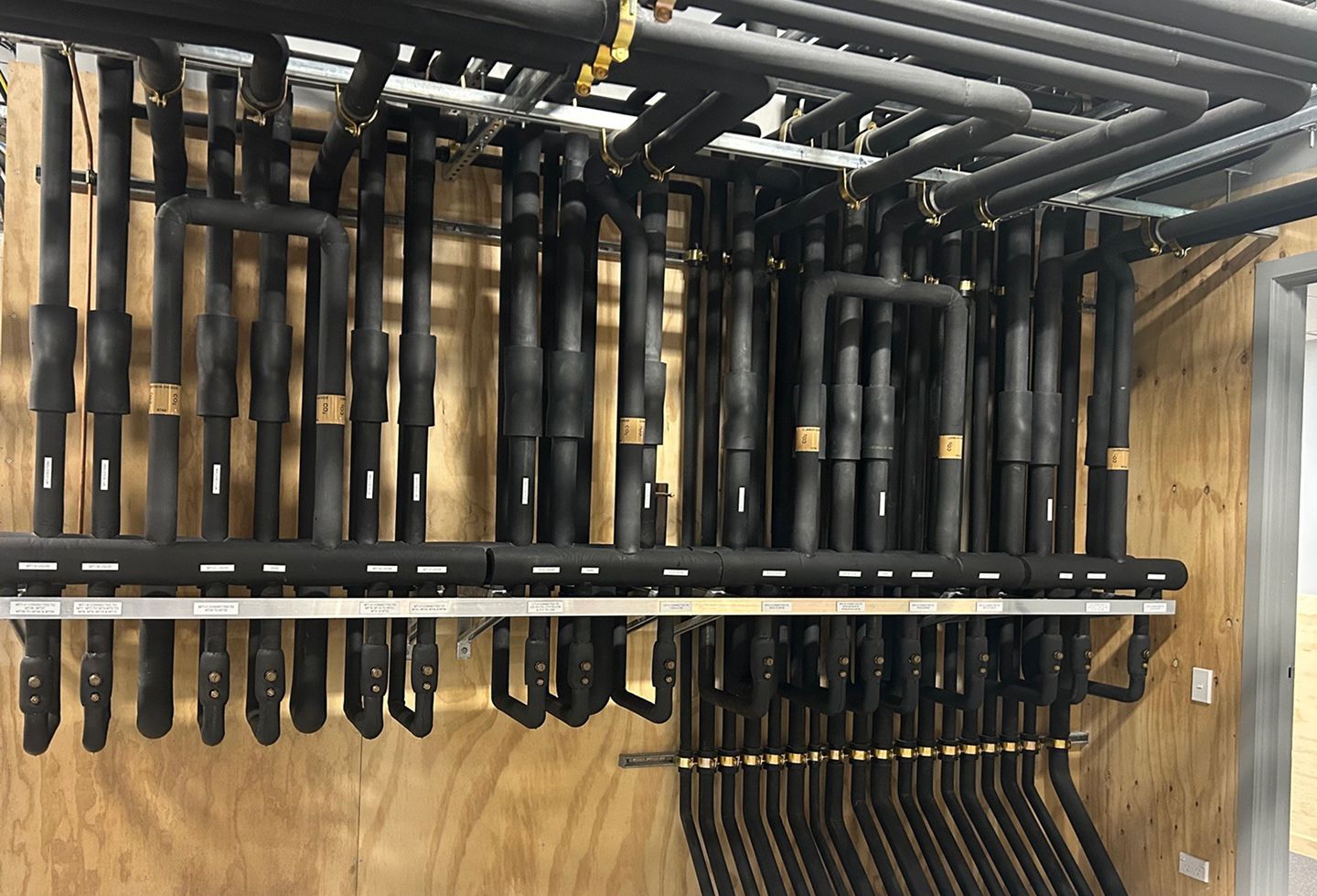
Q: What types of businesses or sectors are showing the most interest in adopting CO₂ refrigeration in NZ? Why do you think this is?
The supermarket and large-format retail sector is leading the charge, driven by both customer expectations and the regulatory environment. Food distribution and cold storage facilities are also increasingly adopting CO₂ as they look to reduce long-term operating costs and future-proof their assets. We’re even seeing growing interest from smaller independents who want to differentiate themselves by highlighting their sustainability credentials.
Q: What do you see as the biggest barrier to wider adoption of CO₂ refrigeration in New Zealand?
The biggest barrier is upfront capital cost, although this is become less and less as the technology become more mainstream. While lifecycle savings are clear, the higher initial investment can be a hurdle, particularly for smaller operators. Another barrier is the relative shortage of trained CO₂ technicians, which is why industry-wide training and collaboration is so important.
Q: How important is training and upskilling technicians for the success of this transition?
It’s absolutely critical. CO₂ systems are safe and reliable, but they operate differently from legacy refrigerants. At FONKO, we’ve placed a strong emphasis on training our team, working with EPTA experts, and sharing knowledge across the industry. Upskilling technicians ensures these systems run efficiently and gives clients confidence that support will always be available.
Q: What excites you most about working with CO₂ systems and shaping the future of refrigeration in New Zealand?
What excites us is knowing we’re at the forefront of a transformation that benefits both our clients and the planet. Every installation we deliver is not only reducing emissions but also proving that sustainable technology can be commercially successful. Being part of this change – and leading it in New Zealand – is incredibly rewarding.
Q: What advice would you give to organisations considering a shift to CO₂- based solutions?
Start the conversation early and consider the longterm picture. While initial costs may be higher, the return on investment through energy efficiency, reduced maintenance, and regulatory compliance is significant. Partner with an experienced provider who understands both the technology and the local market. With the right support, moving to CO₂ isn’t just a compliance choice – it’s a competitive advantage.
With the ongoing phase-down of traditional synthetic refrigerants in New Zealand, the shift toward natural refrigerants is no longer just an option – it’s an inevitability. The major players in the market have already recognised this and adopted CO₂ technology as the standard for today and the future. The next step is for the wider industry – independent retailers and refrigeration contractors – to follow suit, ensuring they remain competitive, compliant, and aligned with where the market is heading.